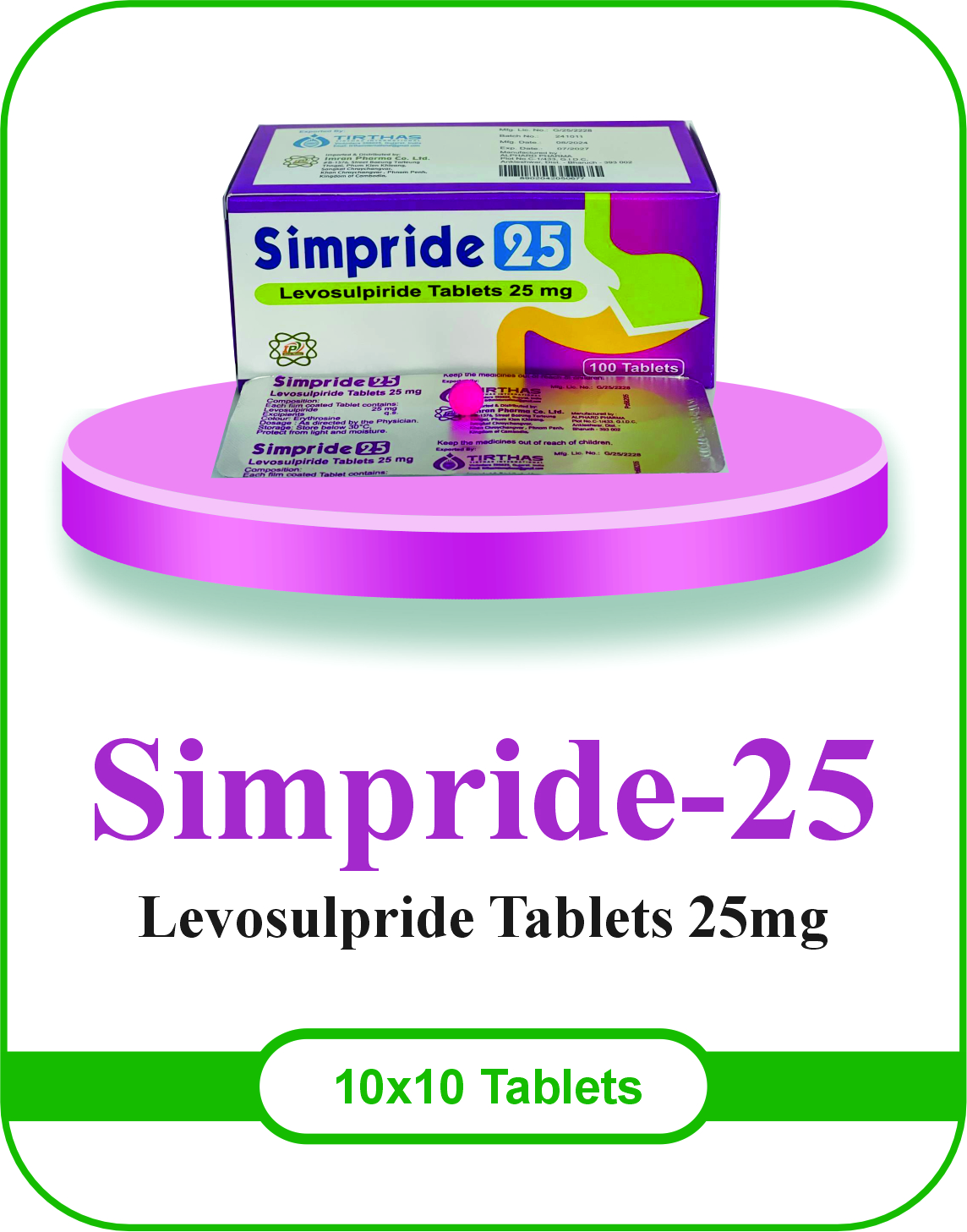
Description
Primary Uses
-
Gastrointestinal Disorders (Prokinetic use):
-
Functional Dyspepsia: Relieves symptoms like bloating, stomach discomfort, and early fullness after eating.
-
GERD (Acid Reflux): Helps tighten the valve between the food pipe and stomach to prevent acid from coming back up.
-
Irritable Bowel Syndrome (IBS): Reduces abdominal pain and improves bowel regularity.
-
Gastroparesis: Speeds up stomach emptying in patients where digestion is abnormally slow (common in diabetics).
-
-
Psychiatric Conditions:
-
Mood & Anxiety: At low doses (25 mg), it can act as a mood elevator to treat mild depression and anxiety.
-
Schizophrenia: Used in higher doses, but 25 mg may be used as part of a maintenance or combination therapy for negative symptoms (social withdrawal, lack of emotion).
-
-
Specialized Uses:
-
Vertigo: Used to manage dizziness and balance issues (vestibular disorders).
-
Premature Ejaculation: Occasionally prescribed off-label to help improve control.
-
How It Works
Levosulpiride has a “dual-action” mechanism:
-
In the Gut: It blocks dopamine (D2) receptors that normally slow down digestion. By blocking these, it increases the release of Acetylcholine, which makes the stomach and intestines contract more effectively to move food along.
-
In the Brain: It modulates dopamine levels to help stabilize mood and thoughts.
Common Side Effects
-
Hormonal Changes: It can increase Prolactin levels, which may lead to:
-
Breast swelling or tenderness (in both men and women).
-
Unusual milk discharge from nipples.
-
Irregular or missed menstrual periods.
-
-
Drowsiness/Dizziness: Often causes a feeling of sedation or sleepiness.
-
Weight Gain: May increase appetite in some users.
-
Movement Issues: In rare cases, especially with long-term use, it can cause tremors or muscle stiffness (Parkinsonism-like symptoms).